
Decatur County Criminal Court Records
A criminal court record is the court case file, not just the arrest. In Decatur County, the Clerk of Superior Court files and processes executed warrants, indictments, accusations, sentences, sentencing packages, and post-conviction matters for felony and misdemeanor cases handled through the county court system. Superior Court has jurisdiction over felony matters. State Court handles misdemeanors, traffic offenses, fish and game violations, Department of Transportation matters, and related arraignments and trials. Magistrate Court may appear earlier for warrants, first appearances, and bond proceedings.
The prosecutor also shapes the record. Felony cases are prosecuted by District Attorney Joe Mulholland for the South Georgia Judicial Circuit. State Court misdemeanors are handled by the Solicitor General's office listed through the clerk's State Court materials. A jail booking may show an alleged charge, but the sheriff warns that displayed charges are not finalized until prosecutors or courts review them. The charge detail itself is covered more closely in Decatur County arrest records and court charges; the full case outcome belongs in the criminal court file.
The South Georgia District Attorney site identifies the prosecuting office tied to felony Decatur County criminal court records.

The district attorney image connects the criminal case file to the prosecutor who reviews felony charges and moves cases through Superior Court.
Search Decatur County Criminal Cases
Decatur County does not publish a single official online portal for all criminal court records in the inspected sources. The Clerk of Superior Court is the core contact for Superior Court and State Court criminal files. For a known case, search or request by defendant name, case number, court type, charge, filing year, and document type. State Court traffic and misdemeanor questions use the clerk's traffic and misdemeanor line. Bainbridge Municipal Court is separate and only covers city traffic and ordinance violations, not county Superior Court felonies.
- Decide whether the matter is a Superior Court felony, State Court misdemeanor, Magistrate first appearance or warrant, Bainbridge Municipal case, or jail booking.
- For Superior or State Court criminal files, contact the Clerk of Superior Court and provide the defendant name, approximate date, charge, or case number.
- For a recent arrest, check the sheriff jail roster or call the jail, but treat booking charges as unreviewed until prosecutors or courts act.
- For a certified disposition, sentence, or case copy, request the record through the clerk instead of relying on a roster or payment portal.
- For statewide criminal-history restriction questions, use the GBI record restriction guidance and the prosecutor route when Georgia law requires it.
The Prosecuting Attorneys' Council profile for Joe Mulholland is another official path for confirming the South Georgia Judicial Circuit district attorney role.

The prosecutor profile image reinforces that felony records in Decatur County belong to a circuit prosecution structure, not a stand-alone county database.
Decatur Criminal Case Flow
A Decatur County criminal court record grows as the case moves from allegation to court outcome. An arrest or warrant may be followed by first appearance and bond activity in Magistrate Court. The prosecutor then reviews the facts and may file an accusation or seek an indictment, depending on the court and charge. Superior Court felony records may include indictments, accusations, executed warrants, pleas, motions, hearings, sentencing packages, and post-conviction filings. State Court misdemeanor records may include accusation, arraignment, plea, trial setting, disposition, fine, restitution, sentence, or probation terms.
Case flow: Charges Filed › Arraignment › Pretrial / Motions › Plea or Trial › Disposition › Sentencing
| Stage | What Happens in Decatur County Records |
|---|---|
| Charges filed | An accusation, indictment, citation, or other charging document starts the court charge record. |
| Arraignment | The defendant is called into court for the charge and plea or status process. |
| Pretrial / motions | Attorneys file requests, notices, bond motions, discovery-related papers, and proposed orders. |
| Plea or trial | The case resolves by plea, non-jury trial, jury trial, dismissal, or other disposition. |
| Disposition | The court records the outcome for each charge or case. |
| Sentencing | The court records fines, restitution, probation, custody, conditions, or post-conviction activity. |
What Decatur Criminal Records Show
Criminal court records in Decatur County may show more than a charge name. They can document the arresting agency, warrant, accusation, indictment, charge count, offense description, statutory reference, bond, plea, disposition, sentence, probation, restitution, fines, post-conviction filings, and sentencing package. The clerk's office also reports dispositions. A person reading the file should look for the latest disposition and sentence rather than stopping at the first charge entry.
| Field | What It Shows |
|---|---|
| Defendant name | The person charged in the criminal court case, subject to juvenile and sealed-record limits. |
| Case number | The court file number assigned after the matter opens in Superior Court, State Court, or another court. |
| Arresting agency | The agency tied to the arrest or citation, such as Decatur County Sheriff's Office, Georgia State Patrol, or Bainbridge Public Safety. |
| Charge count | Each separate charge or count alleged in the accusation, indictment, citation, or case file. |
| Charging paper | The accusation, indictment, executed warrant, citation, or related document that states the charge. |
| Bond | Release terms, bond activity, or later forfeiture and bench-warrant information when part of the court record. |
| Plea | The defendant's formal response or negotiated plea status. |
| Disposition and sentence | The outcome and punishment, including fines, restitution, probation, custody, or post-conviction filings. |
Charges vs Convictions
A charge is an allegation filed or carried into court. A conviction is a final outcome after a guilty plea, verdict, or other qualifying adjudication. This distinction is important in Decatur County because the sheriff booking page warns that charges shown there are not final until reviewed by prosecutors or courts. A criminal court record may show charges that were amended, reduced, dismissed, nolle prossed, or resolved without a conviction.
| Point | Charge | Conviction |
|---|---|---|
| Meaning | An alleged offense stated by officer, prosecutor, accusation, indictment, or citation. | A final finding or plea that results in guilt or sentenced outcome. |
| Timing | Appears early and can change as prosecutors review the case. | Appears after plea, verdict, or final disposition. |
| Record use | Useful for tracking allegations and pending status. | Used to read the actual outcome, sentence, and reporting consequences. |
| Risk | Can be mistaken for guilt if read without disposition. | Can still require sentence, probation, restitution, or restriction review. |
Dispositions and Sentencing Packages
The disposition is the outcome of the charge or case. In Decatur County criminal court records, disposition information may appear with a plea, dismissal, verdict, sentence, fine, restitution, probation, or post-conviction entry. The clerk processes sentences, sentencing packages, and post-conviction matters. Fines and restitution should not be treated as the same thing. The clerk's State Court fines material says fines are part of a sentence or the full sentence, while restitution is separate and tied to victim loss.
Bench warrants and bond events can also appear in a criminal case record. The jail bond page says a bond is a financial guarantee that the arrested person will appear in court and is not a fine. Failure to appear may result in bond forfeiture and a bench warrant ordered by the judge. When a criminal court record shows failure to appear, the reader should confirm the current warrant, bond, and calendar status with the court or jail before making decisions.
Sealed vs Expunged Records
Georgia uses record restriction language for many criminal-history access issues. O.C.G.A. 35-3-37 is the key state record restriction statute noted in the Decatur research. A sealed court file is not the same thing as a restricted criminal-history entry, and either can differ from an ordinary public docket. Uniform Superior Court Rule 21 supports public access unless access is limited by law or order. Juvenile records, adoption records, medical or mental-health material, and protected identifiers may be limited even when part of the case is public.
| Point | Sealed | Restricted / Expunged |
|---|---|---|
| Public view | Hidden from public access by court order or law. | Limited for noncriminal-justice purposes under Georgia restriction rules when eligible. |
| Process | Often requires a motion or court order in the case file. | May require prosecutor contact or arresting-agency application depending on arrest date. |
| Decatur route | Start with the court and clerk for the file at issue. | Use GBI guidance and contact the prosecutor for many post-July 1, 2013 arrests. |
| Clerk role | The clerk can file and retrieve records but cannot give legal advice. | The clerk cannot decide whether a person qualifies or draft a petition. |
The Georgia Bureau of Investigation record restriction page is the state source for Georgia criminal history record restriction under O.C.G.A. 35-3-37.
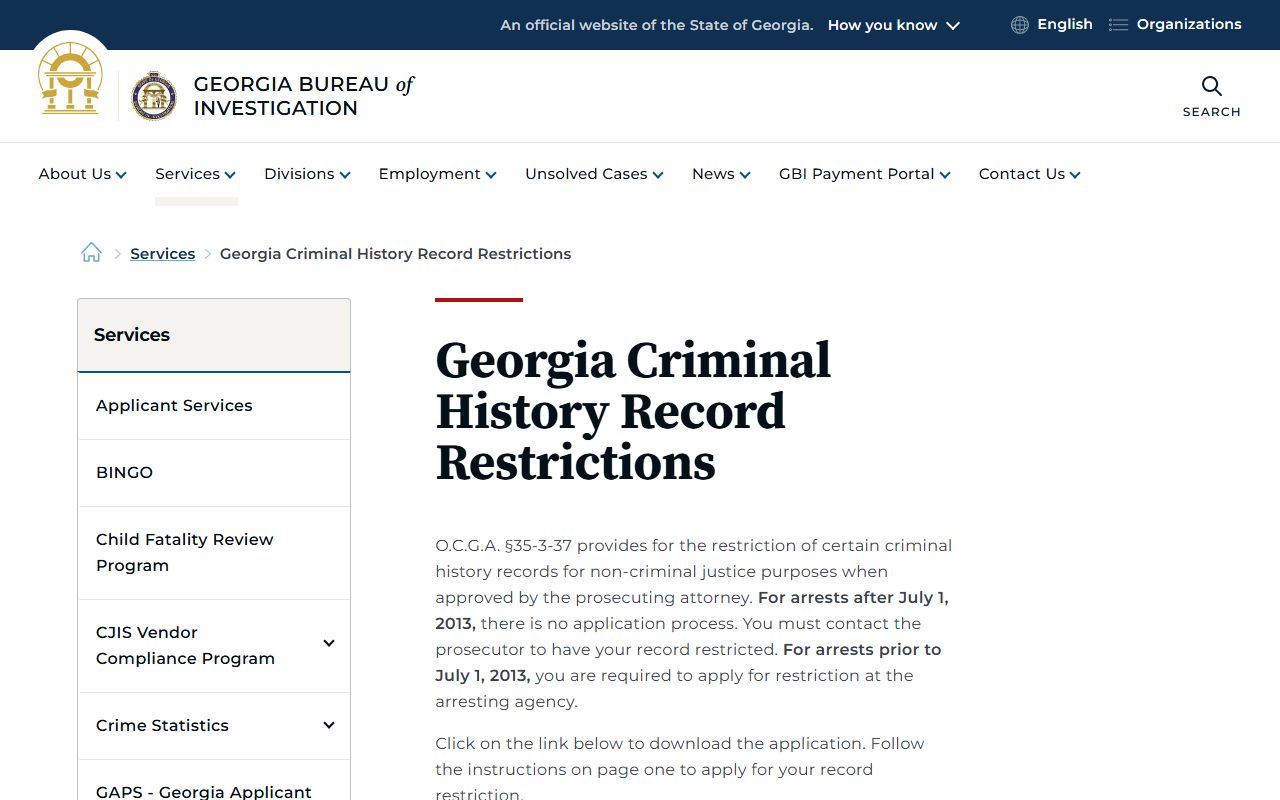
The GBI image supports the distinction between a public court file, a sealed case, and restricted criminal-history access.
Public Access to Criminal Records
Criminal court records in Decatur County are generally public unless a statute, court rule, or judge's order limits access. The Georgia Open Records Act provides a public-records framework, while Uniform Superior Court Rule 21 supports access to court files unless access is limited by law or order. Courtroom access is also broadly favored under Rule 22, though electronic-device and recording use is controlled by court rule.
Public access still has limits. Juvenile criminal-type matters are not ordinary adult public files. Adoption records are sealed. Mental-health, medical, insurance, financial, and protected personal identifier information can be redacted or withheld. Criminal-history restriction after arrest may require the prosecutor or arresting agency rather than the clerk, depending on the arrest date. The public defender's office may be relevant for defendants who qualify for representation, but it is not a public records custodian.
The Georgia Public Defender Council defender lookup helps locate public defender channels for Decatur criminal cases when representation, not records access, is the issue.
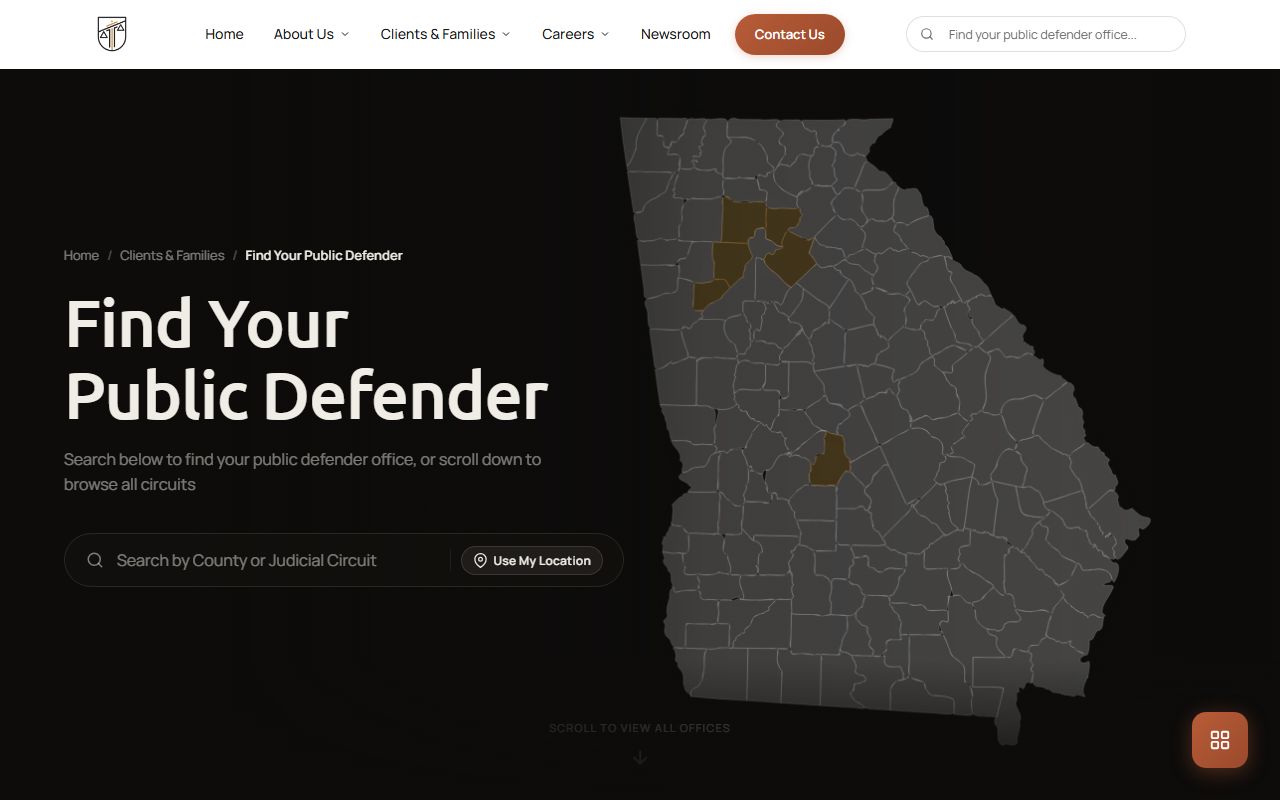
The public defender image belongs here because criminal records often raise access, representation, and case-status questions at the same time.
Restricted Decatur Criminal Records
Some criminal court records in Decatur County are not open to general public review. Juvenile delinquency files, sealed cases, restricted criminal-history entries, mental-health or medical material, and documents with protected identifiers may be withheld or redacted. The clerk e-filing tips list Social Security numbers, mother's birth name, credit and debit card information, financial data, insurance and medical information, unlisted phone numbers, cell phone numbers, and day and month of birth as sensitive data that should be redacted.
For arrests after July 1, 2013, the GBI guidance says there is no application process with the arresting agency for many restriction requests. The person must contact the prosecutor. In Decatur County, felony matters route to the South Georgia Judicial Circuit district attorney, while State Court misdemeanors route through the Solicitor General's office. For older arrests, the arresting agency may be the starting point. The clerk can process records, but legal advice and eligibility decisions are outside the clerk's role.